
Tanzania to Mozambique Self-Drive Adventure: The Ultimate Coastal Overland Journey
Introduction
Driving from Tanzania into Mozambique is one of East Africa’s most underrated overland experiences. It is a journey that blends wild coastal scenery, quiet fishing towns, ancient Swahili trading history, and the raw beauty of untouched Indian Ocean beaches.
Unlike the more commercial safari circuits of northern Tanzania or the resort-heavy beaches of Zanzibar, this route remains raw and authentic. It rewards travelers who want freedom, flexibility, and a sense of discovery rather than structured tourism.
A self-drive adventure along this route is not just about getting from one country to another. It is about the journey itself: long coastal stretches with no traffic, sudden views of turquoise water, dusty villages where life moves slowly, and historic towns that once played a major role in Indian Ocean trade.
For travelers who enjoy road trips, camping, photography, and cultural immersion, this route is one of the most fulfilling in the region.
The Experience of Driving from Tanzania to Mozambique
The journey typically begins in Dar es Salaam, Tanzania’s busy coastal capital, before heading south through quieter and less-developed regions. As you leave the city, the road gradually transforms into a more relaxed coastal highway surrounded by coconut palms, small settlements, and open landscapes.
Unlike northern safari routes, traffic is light and the experience feels remote even though you are still following the coastline. The further south you travel, the more untouched everything becomes.
Southern Tanzania is often skipped by tourists, but this is where the real character of the journey begins to show. Small towns, friendly locals, fishing communities, and long stretches of empty beach define this section of the trip.
Eventually, the route leads you toward Mtwara, the last major Tanzanian town before the border with Mozambique. From here, the sense of adventure intensifies as you prepare to cross into a completely different country, culture, and driving environment.
Southern Tanzania: The Forgotten Coast
Southern Tanzania is one of the least visited regions in the country, yet it offers some of the most authentic travel experiences.
As you travel through towns such as Kilwa and Lindi, you begin to understand the historical importance of this coastline. Kilwa in particular was once a powerful Swahili trading port connected to Arabia, India, and Persia. Today, its ruins stand as a quiet reminder of centuries of trade and cultural exchange.
Lindi offers a slower pace. Life here revolves around fishing, small markets, and coastal livelihoods. There are no crowds, no major tourist infrastructure, and very few foreign visitors. Instead, you experience everyday Tanzanian coastal life in its most natural form.

The road continues south through peaceful landscapes until reaching Mtwara, a coastal town that serves as the gateway to Mozambique. This is a good place to rest, refuel, and prepare for the border crossing.
Nearby, the coastline opens up into beautiful marine environments, including protected areas with coral reefs and traditional dhow fishing boats. It is a region where the Indian Ocean feels especially alive and connected to local culture.
Crossing from Tanzania into Mozambique
The border crossing between Tanzania and Mozambique is located near the Unity Bridge over the Ruvuma River. This bridge connects the two countries and is one of the most scenic and important infrastructure points in the region.
The crossing process is generally straightforward but requires proper preparation. Travelers must carry valid passports, vehicle registration documents, and authorization letters if the vehicle is rented or financed.
Once at the border, a temporary import permit is issued for the vehicle, allowing it to legally enter Mozambique. Third-party insurance is also required and can usually be arranged near the border if not already obtained.
After completing formalities, you cross into Mozambique and immediately notice a change in atmosphere. The language shifts from Swahili to Portuguese, the road signs change, and the surrounding environment feels slightly more tropical and less structured.
This transition marks the beginning of a completely new driving experience.
First Impressions of Mozambique
The northern region of Mozambique is still relatively undeveloped in terms of tourism, which makes it ideal for self-drive exploration. Roads are generally quieter, and settlements are spaced further apart compared to Tanzania.
Shortly after crossing the border, you reach the town of Palma. This area has become more active in recent years due to offshore developments, but it still retains a remote and frontier-like feeling.
From Palma, the journey continues south toward Pemba, one of the most beautiful coastal cities in Africa. The road between these towns is one of the highlights of the entire trip, offering uninterrupted ocean views, palm-lined villages, and endless photographic opportunities.
Pemba: One of Africa’s Hidden Coastal Gems
Pemba is often described as one of the most scenic bays on the continent. The city sits on a vast natural harbor with deep blue waters and soft sandy beaches.
Unlike heavily commercialized beach destinations, Pemba feels relaxed and authentic. Fishing boats come and go throughout the day, and life moves at a gentle pace.
The real beauty of Pemba lies in its surroundings. The nearby Quirimbas region is filled with coral reefs, islands, and marine biodiversity. Snorkeling and diving here reveal vibrant underwater ecosystems, including coral gardens, tropical fish, and sometimes larger marine species such as dolphins and rays.
Boat trips using traditional dhows are common and provide a deeper connection to local maritime culture. These wooden sailing vessels have been used for centuries along the East African coast.
For travelers who want to pause and enjoy coastal life, Pemba is often considered one of the best stops on the entire route.
The Quirimbas Region and Island Life
Further exploration from Pemba leads into the Quirimbas Archipelago, a chain of islands stretching along northern Mozambique’s coastline.
These islands remain largely untouched and offer some of the most pristine beaches in the region. White sand, clear water, and coral reefs define the landscape, while small island communities maintain traditional ways of life.
Visiting the islands often requires boat transport, but the experience is well worth it for those with extra time. It feels like stepping into a different world, far removed from mainland travel.
Continuing to Nampula
As you move further south, the journey takes you inland toward Nampula, one of Mozambique’s largest cities.
The drive inland offers a shift in scenery. The coastal palms gradually give way to rocky hills, agricultural land, and scattered rural settlements. It is a reminder that Mozambique is a large and diverse country, not just a coastal destination.
Nampula serves as an important commercial hub and provides access to supplies, accommodation, and transport services. It is a practical stop for travelers continuing their road trip toward central Mozambique or returning north.
Ilha de Moçambique: A Journey into History
One of the most remarkable destinations in Mozambique is Ilha de Moçambique, a small island connected to the mainland by a narrow bridge.
This UNESCO World Heritage Site holds deep historical significance as a former capital of Portuguese East Africa. The island reflects centuries of global trade, colonial influence, and cultural exchange.
Walking through Ilha de Moçambique feels like stepping into a living museum. Narrow streets, old stone buildings, colonial churches, and ancient forts tell stories of a time when this small island played a major role in international maritime routes.
Despite its historical importance, the island remains relatively quiet, allowing visitors to explore at a relaxed pace without heavy crowds.
Culture and Everyday Life in Mozambique
Mozambique’s culture is a unique blend of African traditions and Portuguese heritage, shaped by centuries of trade along the Indian Ocean.
This influence is visible in architecture, language, music, and food. Portuguese remains the official language, but many local languages and Swahili influences are also present in the northern regions.
Music is an important part of daily life, often combining traditional rhythms with modern styles. Coastal communities, in particular, have strong connections to the ocean, and fishing remains a central livelihood.
Hospitality is another defining feature. Visitors are often welcomed warmly, especially in rural and coastal areas where tourism is still developing.
Food Along the Journey
Food is one of the highlights of traveling through Mozambique. The cuisine is rich, flavorful, and heavily influenced by seafood and spices.
Grilled fish is widely available along the coast, often served fresh with rice or cassava. Prawns and lobster are also common in coastal towns, particularly in northern regions.
One of the most famous dishes is peri-peri chicken, known for its spicy chili marinade and grilled preparation. Cassava-based dishes such as matapa, cooked with coconut milk and peanuts, are also widely enjoyed.
Meals are typically simple but full of flavor, reflecting the country’s coastal lifestyle and access to fresh ingredients.
Road Conditions and Driving Experience
Driving conditions vary throughout the route. In Tanzania, the roads are generally well-maintained along the main coastal highway, though traffic becomes sparse in the southern regions.
After entering Mozambique, main roads are mostly paved, but conditions can change depending on weather and maintenance. Some sections may be affected during the rainy season, especially in rural areas.
Fuel availability is good in major towns but more limited in remote stretches, so planning is essential.
Despite these challenges, the driving experience is highly rewarding due to the scenic landscapes and low traffic density.
Vehicle Choice for the Journey
The type of vehicle used for this journey plays an important role in comfort and flexibility.
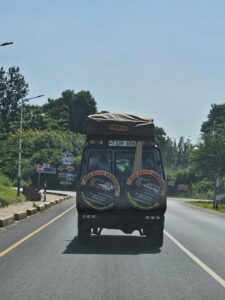
A Toyota RAV4 or similar SUV is suitable for travelers sticking to main roads and urban stops. For more comfort and off-road capability, vehicles like the Toyota Prado or Land Cruiser are ideal.
Pickup trucks such as the Toyota Hilux or Ford Ranger are popular among overland travelers, especially those using rooftop tents and camping setups.
A reliable 4×4 ensures peace of mind, especially when exploring remote coastal areas or traveling during the rainy season.
Safety and Travel Tips
This route is generally safe for experienced travelers, but standard precautions should always be observed.
Driving during daylight hours is strongly recommended, as visibility and road conditions are better. Valuables should be kept secure, and important documents should be stored safely.
It is also advisable to carry water, basic tools, and emergency supplies, particularly when traveling through less populated areas.
Respecting local communities and following road regulations contributes to a smooth and enjoyable journey.
Best Time to Travel
The most favorable time for this self-drive adventure is during the dry season, typically between June and October. During this period, road conditions are more stable, temperatures are pleasant, and travel is generally easier.
The rainy season, from November to April, brings lush green landscapes but can make some roads more challenging.
Conclusion: A Journey of Discovery
A self-drive journey from Tanzania to Mozambique is far more than a road trip. It is a journey through history, culture, and some of the most beautiful coastal landscapes in East Africa.
It combines the quiet charm of southern Tanzania with the untouched beauty of northern Mozambique, offering travelers a rare opportunity to explore regions that remain largely off the tourist radar.
For those seeking independence, adventure, and authentic cultural experiences, this route delivers a perfect balance of freedom and discovery. It is not just about reaching a destination, but about experiencing the road itself—one coastal kilometer at a time.