Guide to Hiring a Car in Tanzania
Tanzania is one of East Africa’s most rewarding countries for a road trip, offering an extraordinary combination of wildlife, mountains, beaches, lakes, forests and remote wilderness areas. From the legendary Serengeti and Ngorongoro Crater to Tarangire, Ruaha, Nyerere, Katavi, Lake Manyara and the beaches of Zanzibar, travelling by rental car gives you the freedom to explore the country at your own pace.
For adventurous travellers, self-drive Tanzania is an excellent way to experience the country. You can build your own itinerary, decide how long to spend in each destination and combine national parks with local villages, scenic routes and coastal destinations.
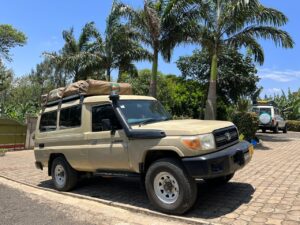
Tanzania has a wide range of rental vehicles, from smaller SUVs suitable for normal roads to fully equipped Toyota Land Cruiser 4x4s designed for safari and rooftop-tent camping.
Whether you are planning a short northern Tanzania safari, a longer Tanzania road trip or an overland journey through East Africa, choosing the right vehicle and understanding the local driving conditions are essential.
What You Should Know Before Hiring a Car in Tanzania
Choose the Right Vehicle for Your Trip
The most important factor when renting a car in Tanzania is choosing a vehicle that matches your route.
If you are travelling mainly between Arusha, Moshi, Dar es Salaam and other major towns on paved roads, a standard SUV may be sufficient.
However, if your itinerary includes national parks, remote areas or camping, a proper 4×4 is strongly recommended.
Safari destinations such as Serengeti, Ngorongoro, Tarangire, Ruaha and Nyerere include gravel roads, dirt tracks, corrugations, mud, sand and rough terrain. Conditions can become particularly challenging during the rainy season.
For a serious self-drive safari, a Toyota Land Cruiser or similar safari-ready 4×4 is generally the best option.
A suitable safari vehicle should ideally have:
- High ground clearance
- Strong suspension
- Good off-road capability
- Reliable tyres
- At least one full-size spare tyre
- Recovery equipment
- Good fuel range
- Sufficient luggage space
For couples travelling on a budget, a smaller 4×4 can sometimes work well, while families and groups will generally benefit from a larger Land Cruiser.
If you are planning to camp, make sure the vehicle is properly equipped with a rooftop tent and camping equipment.
Consider Booking Your Vehicle in Advance
Booking your Tanzania rental vehicle in advance is particularly important during the main safari seasons.
Demand can be high during the dry season and around popular wildlife events such as the Great Migration.
Booking early gives you:
- A wider choice of vehicles
- Better availability during peak season
- Time to arrange camping equipment
- Time to confirm insurance
- More time to organise park arrangements
- Better chances of securing a one-way rental
- More time to arrange cross-border travel if required
If you specifically want a Toyota Land Cruiser with a rooftop tent, do not leave the booking until the last minute.

Remember That Tanzania Drives on the Left
Tanzania drives on the left-hand side of the road.
Most vehicles are right-hand drive, and drivers should keep to the left except when overtaking.
Visitors accustomed to driving on the right should take some time to adjust, particularly when leaving busy towns.
Take extra care around:
- Roundabouts
- Busy junctions
- Pedestrian crossings
- Town centres
- Buses and trucks
- Motorcycles
- Livestock
- Unpaved roads
Traffic around Arusha, Dar es Salaam and other major towns can be busy, so allow additional time for journeys.
Know the Age and Licensing Requirements
Minimum driving ages vary between rental companies. Some companies have different requirements depending on the type of vehicle being rented.
International visitors should generally carry:
- A valid passport
- A valid driving licence
- An International Driving Permit where required or recommended
- Rental agreement
- Vehicle documentation supplied by the rental company
If more than one person will drive the vehicle, make sure all drivers are registered with the rental company and meet its licensing requirements.
Check the company’s requirements before making your booking, particularly if you are under the company’s standard minimum age.
Don’t Leave Valuables in the Vehicle
Avoid leaving passports, cameras, phones, wallets, laptops or other valuables visible inside the vehicle.
When stopping in towns, restaurants or accommodation, lock the vehicle and take important belongings with you.
During a safari, always follow the rules of the national park or protected area regarding parking and leaving the vehicle.
In particular, do not leave your vehicle in areas where park regulations prohibit getting out.
Choose Your Transmission
Rental companies in Tanzania offer both manual and automatic vehicles.
Manual vehicles can sometimes be cheaper, but automatic 4×4 safari vehicles are popular with international travellers who are unfamiliar with local roads.
For a long self-drive safari, choose the transmission you are most comfortable driving.
Safari roads can require many hours behind the wheel, so comfort and confidence are more important than saving a small amount on the daily rental rate.
Understand Insurance and the Security Deposit
Before collecting your rental vehicle, make sure you understand exactly what the insurance includes.
Ask about:
- Third-party liability
- Collision damage cover
- Theft protection
- Windscreen cover
- Tyre cover
- Underside or suspension damage
- Recovery assistance
- Off-road or safari coverage
- Insurance excess
- Security deposit
This is particularly important for safari vehicles.
Damage to tyres, windscreens, suspension or the underside of the vehicle may be treated differently from normal road damage.
Some rental companies include basic insurance while requiring the renter to pay an excess if the vehicle is damaged.
Always read the rental agreement carefully before signing.
Ask About Cross-Border Travel
Tanzania is an excellent starting point for a wider East African road trip, but cross-border travel with a rental vehicle requires advance planning.
Depending on the rental company and vehicle, it may be possible to travel from Tanzania into:
- Kenya
- Uganda
- Rwanda
- Zambia
- Malawi
- Mozambique
However, cross-border travel is not automatically permitted.
Additional insurance, authorisation letters, temporary importation documents and other paperwork may be required.
If you want to drive from Tanzania into Kenya, for example, tell the rental company before booking.
Never assume that a Tanzanian rental vehicle can simply cross an international border.
Consider Hiring a Driver
Self-driving gives you freedom and independence, but a driver-guide can make a Tanzania safari much easier.
Local drivers are familiar with:
- Safari roads
- National park rules
- Wildlife areas
- Fuel stops
- Road conditions
- Remote routes
- Vehicle recovery
- Local attractions
A driver-guide can be particularly valuable for first-time visitors or travellers planning a complicated itinerary involving several parks.
However, experienced travellers who are comfortable driving off-road may prefer the independence of self-drive.
Use GPS Navigation
GPS navigation is extremely useful when driving in Tanzania.
Google Maps works well in many areas, but mobile coverage becomes limited in remote parts of the country.
Before travelling into remote areas, download offline maps.
Do not rely exclusively on standard navigation applications inside national parks. Safari tracks can change, and some tracks may not be shown accurately.
For longer self-drive safaris, an offline GPS or dedicated safari navigation system can be useful.
Fuel Up Before Entering Remote Areas
Fuel stations are common in cities and larger towns but become increasingly limited in remote parts of Tanzania.
Always fill your tank before heading into a national park or remote region.
This is particularly important when travelling to:
- Serengeti
- Ngorongoro
- Ruaha
- Nyerere
- Katavi
- Western Tanzania
- Northern Tanzania
A vehicle with two fuel tanks is particularly useful for long safari routes.
Before your journey, ask the rental company about the vehicle’s fuel capacity, expected range and whether carrying additional approved fuel is permitted.
Inspect the Vehicle Before Driving Away
Before leaving the rental company’s office, inspect the vehicle carefully with a representative.
Check:
- Tyres
- Spare tyres
- Wheels
- Windscreen
- Headlights
- Indicators
- Mirrors
- Bodywork
- Bumpers
- Suspension
- Jack
- Wheel-changing equipment
- Recovery equipment
- Fire extinguisher
- First-aid kit
- Fuel level
- Camping equipment
- Rooftop tent
Take photographs and videos of the vehicle before departure.
Make sure existing scratches, dents and other damage are recorded on the rental agreement.
This can help prevent disputes when you return the vehicle.
Frequently Asked Questions About Car Hire in Tanzania
Can foreigners hire a vehicle for self-drive in Tanzania?
Yes. International visitors can hire vehicles for self-drive in Tanzania, subject to the rental company’s requirements and the driver’s documentation.
Self-drive is particularly popular with experienced travellers who want to explore Tanzania’s national parks independently.
If you plan to enter safari parks, make sure the rental company provides a vehicle suitable and authorised for those routes.
Is it safe to drive in Tanzania?
Self-driving in Tanzania can be a rewarding experience, but travellers should be prepared for very different road conditions.
Major highways between cities are generally easier to drive than rural roads and safari tracks.
Drivers should take extra care at night, on unfamiliar rural roads and around pedestrians, motorcycles, buses and livestock.
Safari driving requires additional attention because tracks can be rough, narrow, muddy or sandy.
What is the approximate cost of car rental in Tanzania?
Rental prices vary according to vehicle type, rental duration, season, insurance and additional equipment.
A small SUV will generally cost less than a safari-ready Toyota Land Cruiser.
A fully equipped Land Cruiser with a rooftop tent and camping equipment costs more because it is designed specifically for remote safari travel.
When comparing rental quotations, check whether the price includes:
- Insurance
- Unlimited mileage
- Camping equipment
- Rooftop tent
- Recovery assistance
- Additional drivers
- Cross-border fees
- One-way drop-off fees
- Safari equipment
The lowest advertised daily rate is not necessarily the cheapest overall rental.
Can I extend my rental while travelling?
Usually, rental extensions are possible if the vehicle has not already been reserved for another customer.
Contact the rental company as early as possible if you want to extend your trip.
This is particularly important during peak safari periods when vehicles can be booked weeks or months in advance.
Should I rent a 4×4 for a Tanzania safari?
For a serious self-drive safari, yes, a 4×4 is strongly recommended.
A standard car may be adequate for cities and paved highways, but safari roads can be rough, muddy, sandy and heavily corrugated.
A proper 4×4 offers better ground clearance, traction and reliability.
For routes involving Serengeti, Ngorongoro, Tarangire, Ruaha, Nyerere or other remote safari destinations, a capable Land Cruiser or similar 4×4 is generally the best choice.
Can I drive my rental car into Serengeti National Park?
Self-drive is possible in Serengeti National Park, but your vehicle must meet the applicable requirements and you must follow the park’s regulations.
A properly equipped 4×4 is essential for many Serengeti routes.
Before travelling, confirm with your rental company that the vehicle is permitted for safari use and that the insurance conditions cover the planned route.
Can I drive into Ngorongoro Crater?
Access to the Ngorongoro Crater is subject to the conservation area’s rules and applicable fees and requirements.
If your itinerary includes driving into the crater, confirm the current requirements with your rental company before your trip.
Not every rental vehicle or rental agreement necessarily covers every type of safari driving.
Can I drive in Tanzania’s national parks?
Yes. Self-drive is possible in a number of Tanzania’s national parks and protected areas.
Travellers must pay the applicable park fees and follow the regulations of each destination.
Rules can cover:
- Opening and closing times
- Speed limits
- Designated roads
- Camping
- Vehicle use
- Wildlife encounters
- Getting out of the vehicle
Always follow the instructions of park authorities.
Can I hire a car with a driver in Tanzania?
Yes. Chauffeur-driven vehicles and safari driver-guides are widely available.
A professional driver-guide can be particularly useful for travellers who are unfamiliar with Tanzania or who want to concentrate on wildlife viewing rather than navigation.
What should I do if I have an accident?
Contact your rental company immediately and follow the accident procedures in your rental agreement.
Do not arrange major repairs independently without first contacting the rental company unless immediate action is necessary for safety.
The rental company should advise you regarding recovery, repairs, reporting and insurance.
Your financial responsibility will depend on the rental agreement and insurance policy.
Can I return the vehicle somewhere other than Arusha?
Some rental companies offer one-way rentals between different Tanzanian destinations.
Possible arrangements may include:
- Arusha
- Kilimanjaro International Airport
- Dar es Salaam
- Zanzibar
- Mwanza
- Other agreed locations
One-way rentals normally involve an additional relocation or driver/fuel charge.
If you are planning a route such as:
Arusha → Tarangire → Ngorongoro → Serengeti → Mwanza
or
Arusha → Serengeti → Zanzibar
discuss the final drop-off location with the rental company before booking.
Can I take a Tanzanian rental vehicle into Kenya?
Some rental companies allow cross-border travel into Kenya, while others do not.
If you want to combine Kenya and Tanzania, confirm this before paying your rental deposit.
The rental company may need to arrange additional insurance and vehicle documentation.
Can I use a rooftop tent in Tanzania?
Yes. Rooftop-tent camping is one of the most popular ways for adventurous travellers to explore Tanzania independently.
A properly equipped camping vehicle may include:
- Rooftop tent
- Mattress
- Sleeping bags
- Camping chairs
- Camping table
- Cooking equipment
- Kitchen utensils
- Lighting
- Recovery equipment
- Spare tyre
Camping should be done only in designated or authorised campsites and according to the rules of the relevant national park or protected area.
Final Thoughts
Hiring a car in Tanzania gives travellers the freedom to explore the country independently, from the wildlife-rich northern safari circuit to the remote wilderness of southern and western Tanzania and the beaches of the Indian Ocean.
For travellers planning a safari, choosing the right vehicle is the most important decision.
A standard SUV can be suitable for normal roads, but a properly equipped 4×4 Land Cruiser is a much better choice for Serengeti, Ngorongoro, Tarangire, Ruaha, Nyerere and other remote safari destinations.
Before setting off, make sure you understand the insurance conditions, security deposit, park regulations, fuel requirements and cross-border restrictions. Inspect the vehicle carefully, download offline maps and plan your fuel stops before entering remote areas.
With the right vehicle and preparation, self-drive Tanzania can be one of the most rewarding ways to experience East Africa, giving you the freedom to build your own safari itinerary, discover remote destinations and travel at your own pace.
For travellers who want maximum independence, a Toyota Land Cruiser 4×4 with a rooftop tent and full camping equipment is one of the best ways to experience Tanzania’s incredible national parks and wilderness areas.